Stoned Featured
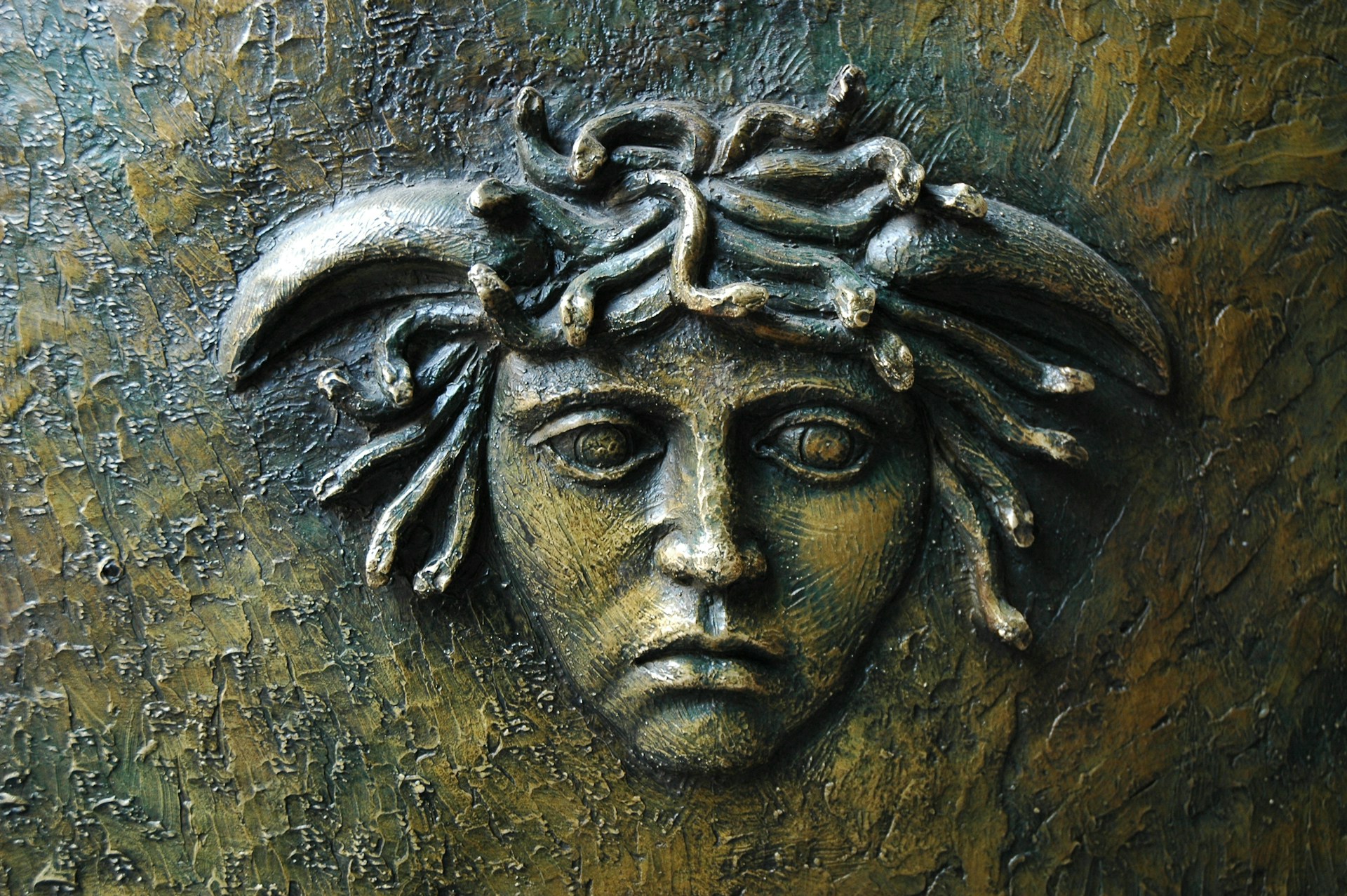
I learned early that a face could be a weapon.
Sixth of six children, I occupied the basement of the family hierarchy – everyone’s punching bag, no one beneath me to absorb the cascade. My siblings had refined the art of passing misery downward like a bucket brigade, and I stood at the end holding a bucket with nowhere to pour it. Fighting back wasn’t an option. I was raised in a home where violence was sin – the kind that sends you straight to hell. You were supposed to say “God bless you” when mistreated, turn the other cheek, trust that the Lord would handle it. I remember avoiding friends who talked about practicing how to hurt someone in a fight, the way one might avoid a pack of sinners. Such knowledge wasn’t wholesome to learn. So here I was: small enough to be picked upon, unwilling to go to hell by fighting, yet not exactly godly enough to just let it go with a “God bless you.” I needed a third option. I made myself look unpleasant to eat. The supervisor at my father’s office noticed early. “Di-Li-Na…” he’d say, stretching out the syllables, “the way you do your face… I wonder how you’ll look in the future…” Everyone would laugh. What he couldn’t have known was the world that scowl protected me in, both home and away.
This wasn’t just a poker face – those are for hiding emotion. This was for broadcasting it. Brow furrowed. Jaw set. Eyes narrowed to a calculation. A preemptive declaration: the juice is not worth the squeeze. This one will cost you. Not that I could back it up – I was still the smallest, still the weakest. But predators are economic creatures. They prefer easy meals. If I could make myself look like indigestion waiting to happen, maybe they’d reach for someone else. It worked, more or less. Not perfectly, not always, but enough. I learned that consistency mattered more than intensity. A permanent low-grade menace outperformed occasional dramatic displays. People who looked perpetually menacing attracted less attention than people who seemed to snap – the former were avoided; the latter were provoked to see what would happen. I calibrated accordingly. Nothing discourages casual cruelty like the suspicion that your target might be unhinged. Picking on me now required calculation rather than impulse, and impulse was how most childhood torment operated. Remove the impulse, reduce the torment. Then boarding school arrived – a graduate program in the same curriculum.
Imagine a dormitory ecosystem where vulnerability is currency spent against you. Homesickness, confusion, the soft openness of a child still learning to be away from home – all of it marked you as prey. The senior boys moved through the halls like sharks sensing blood in water. The only defense was to bleed less visibly than the others. My face became my camouflage. I perfected the expression of someone you’d rather not test. Not angry, exactly – anger invites confrontation from those who want to prove something. What I cultivated was something colder: the look of someone who had already done the math on this interaction and found it wanting. You can try, the face said, but I will make it weird. Year by year, the scowl sank deeper into my features. It stopped being something I put on and became something I simply was. The mask had fused with the face. I couldn’t have removed it if I’d tried – and I didn’t try, because why would I? It worked. I had survived. Besides, the muscles had frozen into their learned defaults – running like subroutines in the background, firing in response to stimuli no longer warranted.
What I couldn’t have understood as a child was that survival tools don’t come with expiration dates. They don’t know when they’ve outlived their usefulness. The armor that saves you at seven stays strapped on at thirty-seven without your consent, even when the battlefield is now a coffee shop. I discovered this gradually, then all at once. San Francisco, Mission and Ocean. I’m walking back to a temporary stay, still new to the city, mind elsewhere, face reverting to factory settings. Two guys clock me from across the street. I see the assessment happening – the quick scan for weakness, the tactical positioning. They start moving toward me with that particular gait that says this is about to become your problem. Then they get close enough to see my face. Whatever expression I was wearing – I genuinely don’t know, I wasn’t trying to look like anything – stopped them mid-stride. They peeled off so fast they almost tripped over each other. I kept walking, only realizing blocks later what had nearly happened. Second time: Turk and Gough. Same setup. Different actors. Hard-faced. Close. Then a sudden about-face, one of them shaking his head vigorously, laughter bursting between them.
“Nah,” one said to his partner. “Noo! Not doing this one.”
I wasn’t flexing. I wasn’t posturing. I was thinking about whether to get Thai food. But apparently my resting contemplation reads like a credible threat assessment. My grocery-shopping face says I will follow you home and rearrange your furniture. Somewhere inside, the child who invented this face felt vindicated. See? It still works. But the adult couldn’t help wondering: what exactly did they see? What was I projecting that I couldn’t see myself?
The absurdity might be funnier if it didn’t have a shadow: the face I developed to protect myself from threats now makes me appear to be the threat. People cross streets when they see me coming. Not dramatically, not running – just the casual drift of someone who suddenly remembered they needed to be on the other sidewalk. Women clutch purses a little tighter. Men give wider berth. On buses, the seat next to me stays empty longest, even when the aisle is packed. I watch it happen with a kind of dissociated curiosity. Here is my face, doing its ancient job, protecting me from threats that no longer exist while manufacturing new ones. The defense mechanism that once said don’t bully this kid now broadcasts possibly dangerous, approach with caution. The irony tastes like copper. I am the thing I defended against. What I built to avoid being perceived as victim now makes me perceived as threat. Same signal, opposite reading. I want to stop these strangers, explain myself. I’m not actually dangerous. I’m running legacy software. There’s been a misunderstanding. But you can’t explain a face. Faces aren’t about truth – they’re about signal. They operate in the oldest part of the brain, the part that decides friend-or-foe before your conscious mind finishes processing what it’s seeing. By the time I could explain, the verdict has been rendered and the jury has crossed to the other side of the street.
Atlanta taught me that the scowl has no off switch, even when I desperately want one. Someone invited me to their birthday party at a place called The Kaleidoscope. I pictured – I don’t know what I pictured. An event space, maybe. Balloons. A DJ playing requests while people made awkward small talk over cake. It was a bar. This was, I should clarify, my first adult bar experience. Not my first drink – I wasn’t a monk – but my first time in an actual establishment where the primary activity was the consumption of alcohol by strangers in dim lighting. I hadn’t prepared for this. I didn’t know the protocols. Some part of me kept judging that I shouldn’t be here at all. Was I supposed to just… stand there? Holding a drink? Near other people who were also standing and holding drinks? People I would have once wrongfully catalogued as sinners just for being inside a bar – which, by my own obsolete logic, now made me one too? My head knew better. But the old programming and the sheer unexpectedness of the situation were staging a peaceful protest. The face did what it always does when the environment exceeds parameters. It went to red alert.
Boy, did I scowl.
All evening. Hours of it. A thunderhead nursing a ginger ale in the corner, radiating do not engage. My face was not saying I am socially overwhelmed and processing this experience with all available cognitive resources. My face was saying I am fundamentally opposed to joy and would like everyone here to know it. People gave me space. They probably thought I was a bouncer, or someone’s angry ex, or a very lost accountant who’d wandered in looking for spreadsheets. The worst part? I wasn’t in danger. I wasn’t being bullied or targeted. I was just uncomfortable. Just out of my depth. Just a person who didn’t know how bars worked, attending his first one at an age when most people had moved on to wine tastings. But my face didn’t know that. My face only knew: unfamiliar environment, potential threats, engage countermeasures. The same face that had protected six-year-old me from my siblings, that had gotten teenage me through boarding school, was now making it impossible for adult me to enjoy a birthday party. I remember the birthday person checking on me twice. “You okay?” they asked, with the specific concern of someone who has invited a gargoyle to their celebration and is now questioning their judgment. “Fine,” I said. Scowling.
Dating is where the whole system becomes genuinely tragic. My romantic life, much to any partner’s frustration, tends to be unwholesomely chaste. Not by conviction – just by constitution. Interest arrives at about the frequency of fertility after fifty. A second date is an event. Here’s the scene: dinner, second date, things going well. She’s telling a story, animated and funny. I’m enjoying it. I’m present. This is good. Then my brain, unbidden, offers a contribution. Not about her, not about dinner – about the data architecture problem I’ve been stuck on for three weeks. Right now, between the appetizer and the entrée, my mind has decided to surface the elegant tree structure that would finally make the algorithm work. I can see it, almost physically, the nodes branching with perfect logic.
Not now, I tell my brain. This is a date.
But this is the solution, my brain replies. You’ve been stuck on this for weeks. Write it down.
I’m not writing anything down. She’s telling a story about her childhood.
You’ll forget. You know you’ll forget. By tomorrow this will be gone and you’ll be back to brute-forcing it.
The dilemma is genuine. These visitations don’t come on schedule. The idea is here now, fragile and complete, and if I don’t anchor it somehow – a note on my phone, a napkin sketch, something – it will dissolve back into the murk it emerged from. But I’m also sitting across from a woman I like, who is sharing something real, and reaching for my phone would say you are less interesting than my notifications. I try to hold both: her story in my foreground, the data structure in peripheral grip, like balancing a glass on each palm. Then my gastrointestinal system, apparently feeling left out, decides to join the conversation. Something shifts down there. Not urgent, not dire, but enough to add a third voice to the internal parliament. Excuse me, my gut offers. We may have opinions about the scallops.
Not now.
Just keeping you informed.
She’s still talking. What was she saying? Something about her sister, or her job, or – I’ve lost the thread. Three seconds of internal chaos and I’ve lost the thread.
Can everyone please settle down in here?
That thought, the exasperation of it, the desperate plea to my own organs and neurons to not start a conference during a social engagement – that thought passes across my face. I feel it happen. The brow. The jaw. The full configuration. She pauses mid-sentence. I watch her read my expression – the expression of a man who has just heard something distasteful. Something that has activated his judgment. She glances back, scanning her own words for the offense. What did she say? Was it the part about her roommate? The joke about her mother? She’s auditing herself now, trying to locate whatever she revealed that made this man’s face close like a door. She didn’t reveal anything. She was being delightful. But my face has testified otherwise, and faces are credible witnesses.
“Sorry,” she says. “I didn’t mean—”
“No, no,” I manage. “It’s not—”
But what can I say? My intestines had opinions about the scallops and also I was thinking about tree structures? The explanation is worse than the silence. The evening continues, technically. But something has shifted. She’s choosing her words more carefully now. Testing the water before each sentence. My face accused her of something, and she’s accepted the verdict without knowing the charge. What a jerk, I imagine her thinking. And fair enough. What else would you think? I’ve tried explaining it, on other occasions. “Sorry, I wasn’t frowning at you. I frown at situations.” But that sounds like an excuse, or a red flag dressed up in self-awareness. I’m not mean, I just look mean involuntarily is not the reassurance it might seem. The truth is stranger and harder to convey: my face learned its job in environments where looking approachable was dangerous. Now I’m in environments where looking unapproachable is its own kind of danger – not physical, but social. I’m protected from threats that don’t exist while frightening people I’m trying to invite closer.
But the scowl’s cruelest work isn’t on strangers or first dates. It’s on the connections that actually mattered. Jon and Carrie were a couple I genuinely liked. The kind of people you meet and think, yes, more of this. We’d connected at some gathering or another, exchanged the pleasantries that sometimes deepen into real friendship. I wanted that deepening. Months later: a business meeting at the illy café on California and Montgomery. I’m focused on whatever I’m focused on, mind in work mode, face in its default configuration. Across the café, someone keeps glancing my way. Smiling. Broadly, warmly, the smile of recognition and gladness. I register the attention without registering the person. Who is this? What do they want? My discomfort rises. I avoid eye contact with the determination of someone dodging a sales pitch. His meeting ends. He walks toward the door, and as he passes, he looks directly at me – a full, open smile, the kind you give a friend you’re happy to see. I return it with a quizzical scowl. Do I know you? What is this about? He left. I forgot about it.
It took months before the recognition arrived, unbidden, devastating. That was Jon. Jon, whose company I’d enjoyed. Jon, who had seen me and felt happy about it. Jon, who had offered the simple gift of a smile across a crowded café and received in return the face of a man who couldn’t place him and didn’t particularly want to. The realization sat in my chest like a stone. Why didn’t he just say something? I kept thinking, aching with it. But for normal, civilized people – a smile should have been enough. A smile is the greeting. The wave across the room. The hey, good to see you. And I had met it with suspicion and blankness. As though sealed by fate, I ran into Jon again weeks later. Walking to a community gathering, I passed a man on the sidewalk. He held a rigid face, straightened his tie. I noticed this because I was looking at his face without really looking at him – the way you register strangers in peripheral vision, cataloging without connecting. I walked into the gathering. The person who walked in directly behind me was Jon. A thousand curses. Could fate be crueler?
This time, he hadn’t smiled. Why would he? The last time he’d offered warmth to this particular face, he’d gotten stone in return. He’d learned the lesson my face had taught him: this one doesn’t want your friendliness. I should have turned around. Should have greeted him, explained, laughed it off. But I had just been looking at his face on the sidewalk – looking without seeing – and the embarrassment of that, the absurdity of having done this twice now, kept me walking forward. The gathering was large. We never crossed paths again that morning. Jon and Carrie remained people I genuinely liked. But we never became what we might have. Who could blame him? He’d tried. Twice, he’d offered the normal human gesture of warmth to someone he thought was a friend. Twice, he’d met the scowl. Some lessons you teach people whether you mean to or not.
The scowl is still here. Still my first response to disorientation. Still carving its patterns into my face a little deeper each year. I am forty-something years into this relationship with my own expression, and we are not as separable as I sometimes wish. What I’ve learned instead is to hold it differently. The language of self-improvement says I should shed what no longer serves me. We talk about trauma responses like they’re expired coupons – once useful, now just clutter in the drawer. The goal, supposedly, is to become the person you would have been if the hard things hadn’t happened. To uninstall the survival software and run clean. But biology isn’t as lenient. The scowl doesn’t know the difference between a boarding school dormitory and a San Francisco street corner. It treats all unfamiliar territory as potentially hostile, which is both wildly inaccurate and occasionally exactly right. Those guys on Turk and Gough weren’t deterred by my good heart. They walked away because my face told them something that made the math unfavorable. The same mechanism that makes coworkers uneasy once made me a bad target.
What do you do with a tool like that? Something both obsolete and operational, both maladaptive and effective – a relic of a child who needed it that still occasionally performs as designed? The scowl was a gift. A costly one, charged at compound interest, but a gift nonetheless. A small boy in a hostile world needed something that worked, and this worked. It kept him intact through sibling warfare and dormitory politics and all the environments where softness was a liability. That it now misfires in coffee shops and on first dates doesn’t erase what it did when it was needed. Though sometimes I wonder if the gift was also a curse in disguise. Looking back, I actually wish I’d gotten into more fights as a kid. Let out the aggression, taken a few punches, thrown a few back. A black eye fades. A split lip heals. But deferring to religion, avoiding the sin of violence – that pushed me toward something more sophisticated. More durable. A fight ends; the scowl followed me into adulthood. Maybe the wholesome path wasn’t so wholesome after all. Even so, you can’t renegotiate terms with your past self. You can only live with what they signed you up for.
Maybe the question isn’t how to uninstall the scowl. Maybe it’s how to live with the fact that we become the strategies that saved us, and sometimes those strategies outlive their usefulness without quite becoming useless. I am, in middle age, still the youngest of six. Still the kid who learned that looking unpleasant was cheaper than being picked on. Still carrying that lesson in the architecture of my face, broadcasting warnings to a world that mostly doesn’t need warning. The scowl isn’t a bug. It’s a feature from an earlier version of the software, written for hardware that no longer exists, still running because no one ever wrote the patch. I could maybe disable it, if I worked hard enough, if I spent enough years rewiring the reflexes. But then I’d have to cross Mission and Ocean without it. Walk through Turk and Gough with a softer face. And honestly? I’m not sure I’m ready to find out what that costs.
Last week, I caught my reflection in a store window. I was just walking, thinking about nothing much. My face was doing the thing – the brow, the jaw, the thousand-yard stare of someone who has seen too much and found it all vaguely disappointing. I stopped. Looked at the scowl. The scowl looked back. We kept walking.
Featured song:
Similar Essay: Forgetting to Check
Image Source